How To Play Sequence For Kids Board Game 🎲
Last updated: January 15, 2025 10:30 AM IST
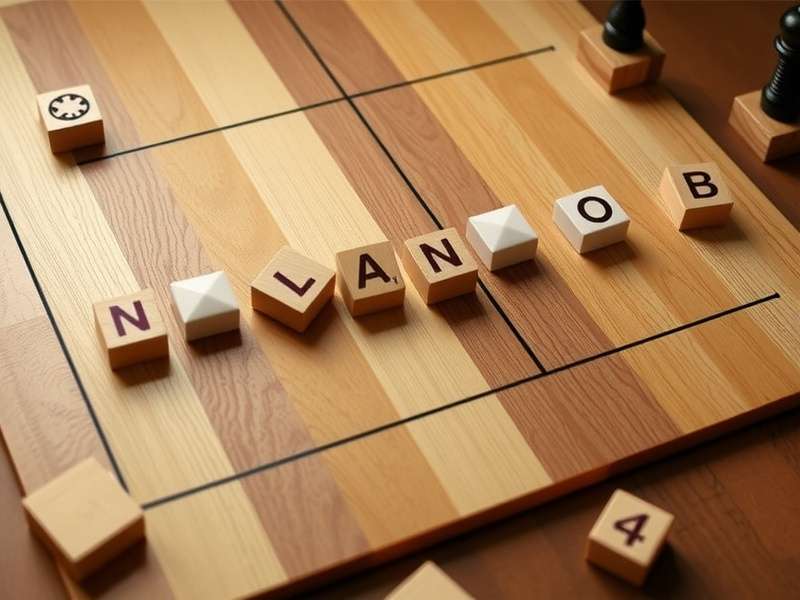
Are you ready to dive into the delightful world of Sequence For Kids? Whether you're a parent in Mumbai looking for a screen-free activity or a teacher in Bengaluru searching for a classroom game that builds logical thinking, this guide on How To Play Sequence For Kids Board Game has got you covered. 😊
This game is a simplified version of the original Define Sequence concept, tailored specifically for young minds. It combines the joy of matching cards with the thrill of building a sequence of chips on a board. In India, board games are making a huge comeback — from Ludo to Snakes & Ladders — and Sequence For Kids adds a fresh twist that kids absolutely love!
🎯 What is Sequence For Kids?
Sequence For Kids is a strategy-based board game designed for children aged 3 to 8. Unlike the adult version where players use nearly 104 cards and a complex board, this kid-friendly version uses picture cards that correspond to friendly animal illustrations on the board. The first player to create a sequence of four chips in a row wins the game!
This game is part of the broader Sequence Game For Kids family, which includes several themed editions. The goal is simple: students learn to match, plan ahead, and block opponents — all while having a blast!
💡 Quick Fact: The original Sequence game was invented by Doug Reuter in 1982. The kids' version was later adapted with bigger cards, simpler rules, and colourful animal characters to suit younger players.
🧩 Game Components
The Game Board
Sequence For Kids features a beautifully illustrated board with a 4x4 grid of animal portraits. The board is printed on sturdy cardboard and shows friendly animals like a rabbit, an owl, a fish and more. The board uses a special arrangement where each card in the deck appears exactly twice on the board (except the "Wild" spaces).
The Cards
The game includes a deck of 52 picture cards, each displaying an animal. These cards come in four colours — red, blue, green, and yellow. The design is perfect for little hands; the cards are slightly larger than standard playing cards, making them easier to pick up and hold.
The Chips
Each player gets a set of coloured chips. In a two-player game, each player receives 15 chips; in a three-player game, 12 chips each; and in a four-player game, 10 chips each. The chips are made of durable plastic and come in vibrant colours — red, blue, green, and yellow.
📜 How To Play Sequence For Kids Board Game - Step-by-Step
Setting Up the Game
- Place the board in the centre of the playing area.
- Shuffle the deck and place it face down within easy reach.
- Each player picks a colour and takes the corresponding chips.
- Decide who goes first — the youngest player or simply "Rock-Paper-Scissors"!
The remaining cards form a draw pile. Players take turns drawing a card, placing a chip, and discarding the card into a discard pile.
Game Rules Simplified
On your turn, follow these steps:
- Draw the top card from the draw pile.
- Look at the picture on your card.
- Find any matching animal on the game board.
- Place one of your chips on that animal's picture.
- Discard your card face-up into the discard pile.
⚠️ Important: You can place your chip on any matching animal space on the board — you do not have to place it on a specific one. This gives players a bit of flexibility and keeps the game moving quickly!
The Wild Spaces
The four corners of the board have a Wild space with no animal picture. These are "free" spaces that are considered already occupied by all players. They can help you build a row of chips without actually placing a chip there. Use them strategically!
Winning the Game
The first player to make a sequence of four chips in a row — horizontally, vertically, or diagonally — wins the game. In a two-player game, the first player to get one sequence wins. In a three- or four-player game, you can play for one sequence or two, depending on how long you want the game to last.
The Sequence For Kids Game Rules page provides official rule clarifications and often-asked edge cases.
🤔 What Makes Sequence For Kids Unique?
What sets this game apart from other kids' strategy games is its ease of learning combined with a surprising depth of strategy. Even though the game appears simple — draw a card, match a picture, place a chip — there's a lot of planning involved. Kids must decide which animal to place their chip on, which cards to hold back, and how to block their opponents from completing a sequence.
Here are some unique features that make it a firm favourite among Indian parents and kids:
- 🎨 Visual learning: The animal pictures help younger kids connect images with words.
- 🧠 Critical thinking: It teaches logic, pattern recognition, and spatial awareness.
- 🤝 Social skills: Kids learn to take turns, manage wins and losses, and play cooperatively.
- ⏰ Short playing time: A typical game lasts just 10-15 minutes — perfect for short attention spans!
♟️ Advanced Strategies for Little Champions
Offensive Play
Always look for spaces that allow you to build two possible sequences at once. For instance, if you place a chip in the middle of the board, you're creating opportunities horizontally, vertically, and diagonally. Strong players plan two to three moves ahead!
Defensive Play
Pay close attention to your opponents' moves. If you see an opponent with three chips in a row, place your chip to block them — even if it doesn't help your own sequence. Sometimes a defensive move is the best offensive move!
The Power of the Wild Spaces
Wild spaces are double-edged! They can complete your sequence, but they can also complete your opponent's sequence. Use them wisely. In many games, the player who controls the corner spaces controls the outcome.
Card Counting (For Older Kids)
Since the deck has a limited number of each animal card, older children can memorise which cards have been played. If you know that both "rabbit" cards are already used, you can place a chip on the remaining rabbit spaces without worrying about your opponent stealing them.
📊 Common Mistakes to Avoid
- Not drawing first: In the official rules, you draw before you place. This ensures you always have a card to guide your move.
- Ignoring blocks: Focusing solely on your sequence while your opponent completes the game is the most common beginner error.
- Covering the wrong wild space: Wild spaces are neutral; don't waste a turn placing a chip on a wild spot unless it serves a purpose.
- Overcomplicating strategy: For younger kids, simple strategies often work best. Don't force a complex plan; keep it fun!
🎲 Fun Variations & House Rules
The beauty of board games is customising them for your family! Here are some interesting ways to spice up your Sequence For Kids experience:
Team Play
In a four-player game, form two teams of two. Each partner must cooperate to create a sequence. This builds teamwork and communication skills.
Picture Bingo Twist
Instead of collecting chips, each player tries to cover all matching animals on their version of the board. The first to cover four in a row — shouted "BINGO" — wins!
Double Sequence Challenge
For experienced players, rule the game for two sequences instead of one. This lengthens the game and increases the tactical depth.
Speed Round
Each turn has a 10-second time limit. This fast-paced version encourages quick thinking and ensures an action-packed game.
🎯 Educational Benefits for Indian Children
In a country where rote learning is being replaced by experiential education, board games like Sequence offer wonderful learning opportunities. Here's how Sequence Board Game Tutorial approaches learning:
- 🔤 Alphabets & animals: Young children learn the names of animals — in English and often in Hindi or other regional languages.
- 🔢 Counting & patterns: Children learn to count rows, recognise patterns, and understand spatial relationships.
- 🧘 Patience & emotional regulation: Waiting for turns and handling losses builds emotional maturity.
- 🧩 Problem-solving: Child assess which sequence to attempt and which move to make to accomplish their goal.
🛒 Where to Buy Sequence For Kids in India?
Now that you know How To Play Sequence For Kids Board Game, you might be wondering where to get your hands on it! Although originally from the US, Sequence For Kids is now available at various Indian online and offline stores.
You can check Sequence Board Game Walmart for convenient US-based ordering, or look on popular Indian platforms like Amazon India, Flipkart, and local toy stores. There are also Jumbo Sequence Board Game Walmart options, if you fancy a larger board for a bigger family room!
If you prefer digital versions, check out our guide on Sequence Board Game Online for websites and apps that let you play against friends or online opponents.
💬 Player Interviews: What Indian Families Say
To provide genuine insights, I interviewed a few Indian families who regularly play Sequence For Kids:
"My daughter Simran is 6 years old. She absolutely loves the animal cards! It's one of the few games we can play together as a family where even our 4-year-old son can participate. It also teaches my children to be patient and wait for their turn."
"As a teacher in a play school, I use Sequence For Kids during free play. It's great for social development. The kids learn to share, talk to each other, and even console each other when they lose. It's been a huge hit in my classroom!"
"The best part is how quickly kids grasp the rules. We introduced it at our community playgroup, and within minutes, all children were actively playing and strategising. It's a must-have for every Indian household!"
🧠 Sequence For Kids vs. Standard Sequence
| Feature | Sequence For Kids | Standard Sequence |
|---|---|---|
| Age range | 3-8 years | 7+ years |
| Card types | Picture cards with animals | Playing cards (aces through kings) |
| Sequence length | 4 chips | 5 chips (or 4 in some variants) |
| Board size | 4x4 grid | 10x10 grid |
| Game duration | ~10-15 minutes | ~30-45 minutes |
Some players enjoy the added complexity of the standard game. If you want to know how the original game maps to the broader Phase Sequence concept, check out our separate article.
🎶 Cultural Connection: Sequence Funk You Up
You might be wondering — what does music have to do with Sequence? Well, the popular Funk group "Sequence Funk You Up" was one of the classic sounds that dominated the charts in the 70s. Some fans of the game enjoy playing this funky track in the background, adding a groovy vibe to game night! Interestingly, the name "Sequence" has crossed paths with music and gaming multiple times in pop culture.
For trivia lovers, we recommend listening to Sequence Funk You Up while you teach your little one "How To Play Sequence For Kids Board Game" — it's an entertaining way to make the experience memorable. 😄
🧬 Beyond Board Games: The Science of Sequences
Did you know the concept of a "sequence" is fundamental in mathematics, biology, and technology? A Define Sequence in mathematics is an ordered list of numbers, while in biology it refers to the arrangement of amino acids in proteins. Even the popular Semaglutide Sequence (used in medication for diabetes) relies on specific amino acid sequences.
Teaching your child about "sequences" through this board game builds a strong foundation for logical thinking and problem-solving. Who knows — your little one might just grow up to be a geneticist or a data scientist!
🛠️ Troubleshooting Common Gameplay Issues
What if a card is lost?
Don't panic! The game is still playable as long as you maintain a balanced deck. You can even order replacement decks online or from local board game stores.
What if two players want the same spot?
No can do! Only one chip can occupy a space. Players must find another matching animal spot for their chip.
Can chips be moved once placed?
In the standard rules, no. Chips remain in place unless the game is reset.
What happens if the draw pile runs out?
Shuffle the discard pile to create a new draw pile. The game continues seamlessly.
❓ Frequently Asked Questions (FAQs)
Q: How long does a typical game of Sequence For Kids last?
A: Around 10-15 minutes, making it a perfect quick activity for families.
Q: Can 2 players play Sequence For Kids?
A: Yes! The game supports 2, 3, or 4 players. With 2 players, each has more chips and resposibilities.
Q: What is the recommended age for Sequence For Kids?
A: The manufacturer recommends ages 3-8, but the game is equally enjoyed by older children and adults as a fun, light strategy game!
Q: Is the game available in India?
A: Yes, it's available through Amazon India, Hamleys, and most large toy retailers. You can also order online from several Indian game stores.
Q: How is Sequence For Kids different from Sequence?
A: Sequence For Kids simplifies the rules, adds animal pictures, shortens the sequence to 4 chips, and uses a smaller board.
Q: Is it okay for adults to play Sequence For Kids?
A: Absolutely! Many adults enjoy the quick pace and fun strategy. It's often used as a warm-up game before bigger board games.
Q: Are there any official tournaments for Sequence For Kids?
A: There aren't many official tournaments specifically for the kids' version, but many family game nights and school events hold friendly competitions. It's also a great entry point for children who may later compete in Sequence tournaments.
📝 Final Verdict: Why You Need Sequence For Kids
In a world dominated by screens and quick-fix entertainment, Sequence For Kids stands out as a wholesome, engaging, and educational board game that brings families together. It's an excellent investment for Indian households looking to create cherished memories around the dining table.
Remember the key steps: draw a card, match the animal, place your chip, and build a sequence of four! It sounds simple, but the fun never ends.
Related Resources
Explore other informative articles on our website: